| Learning How to Be in Relationship Central to the Learning at PBA
Dear readers of the What's New,
When I was seventeen and in my senior year, nothing mattered more to me than friendship. Forging relationships beyond the parental ken while busily imagining college life and working to craft the skills I would need there in common cause with my friends brought levels of happiness, frustration, and feeling that seemed important and vital. Thirty-some-odd years later, the opportunities for schools to steward the development of skills in relationship for students are more important than ever. We said the internet made the world smaller. Social media gave us access to our pasts, present, and networks in ever-present rapid fashion. And yet, teens today have poorer mental health profiles and report feeling lonelier than ever.
| We seem to totter between cycles of community-building, tent-broadening discourse that widens the franchise and the present fracking of broader coalitions to split us into zero-sum interest groups seeking maximum advantage and calling out in echo chambers only to misperceive the echoes as the totality of the truth. | | Paradoxically, at a time when empathy, or the ability to walk a mile in another’s shoes, would seem ever more important to bridge the issues that divide us, thought leaders mount attacks on empathy itself, asserting that, insofar as sensing, understanding, and feeling the plight of others moves us from our fixed opinions and interests, empathy is a sin. I’ve been reading a host of articles by psychologists, political philosophers, journalists, and podcasters that distinguish empathy from compassion, feeling from understanding, listening from action, or listening as a form of action, and how these arguments are influencing decision-makers in our institutions in a variety of ways. | | 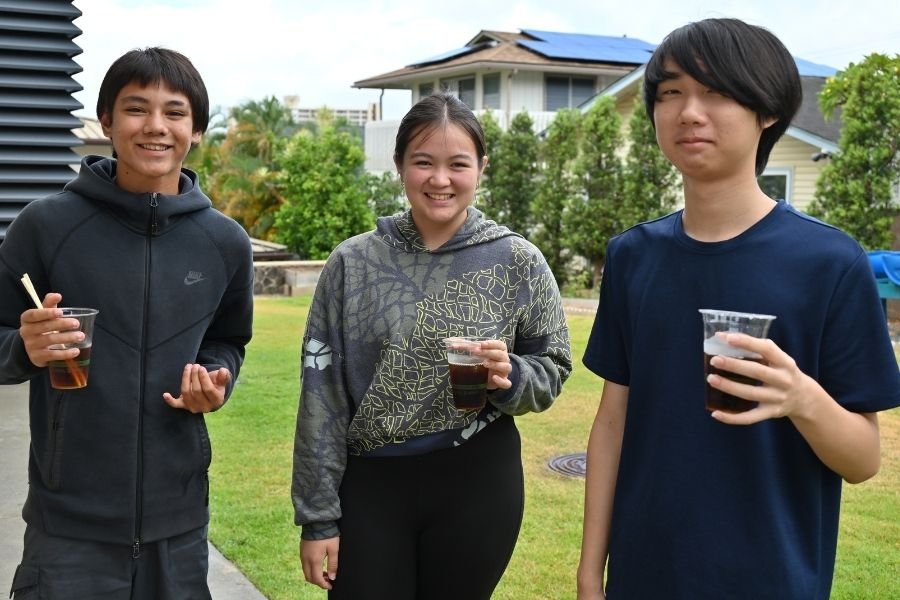
| I suppose the critique of empathy proves the point that anything can be argued about. But in my recent dive down the rabbit hole of trying to parse the difference between empathy, sympathy, kindness, compassion, I discovered the philosophical question of what empathy is leads to important questions about human relationships, how we should care for others, and effective action. | How to be in relationship is at the core of the curriculum design of Pacific Buddhist Academy’s intentional community. From our emphasis on restorative practices, to our sequence of peace core classes, to our advisory system, to the commitment of being an excellent, values-based small school focused on our connectedness with one another, everything we do in a school year builds us to teach our young people how to be present with each other; how to listen to one another without being shaken from our own centers; how to find our centers through breathing and contemplation and challenge and fun; and how to celebrate the diversity of individuals we gather together year after year. All the rage and attention of the educational industrial complex and of the nation-at-large is on artificial intelligence and how it will disrupt/is disrupting our schools, our lives, the world. Don’t get me wrong – PBA is in the midst of developing an institutional posture that will position us to leverage these tools as tools, so that our young people can employ them effectively for the benefit of our communities and peace practice. | But I am prouder of our commitment to what I would call ancient technologies we employ at the school that teach the students to look inside themselves, to identify what they care about, to work hard together and strive and grow. I think of the restorative practice we use that PBA calls “sangha circles,” or community circles, which entails the simple act of sitting with a group of young people and their | | adviser and taking turns sharing in response to the adviser’s prompt – how are you feeling inside today, and why, what’s happening? Or as was the prompt for yesterday’s advisory – how are you feeling about camp next week? That’s right – PBA goes to camp next week! Next Tuesday, Wednesday, Thursday, the entire PBA Sangha will travel to the windward side and live together three days, two nights, in our own tent city, cooking, singing, playing, competing, swimming, sweating, taking cold showers, playing hearts and mahjong and looking at the stars and roasting marshmallows and hopefully staying pretty dry and using enough sunscreen to keep our skin healthy and happy. It should be understood that, in the context of this essay, PBA school camp is all about being in relationship. In the language of the students, it’s where we bond and come closer together as a school. Dean of Students Liane Viloria and the senior Class of 2026 have worked the past month to plan, rehearse, and build excitement for this year’s camp experience. | | One of the things this means is that the PBA Office will be closed for most of next week, since Friday next, the day we return, we give ourselves a holiday to recover! (We will be reachable by phone, should you need, and of course our families will have access to us while we are there.)
But though we’ll get back a little beat up and ready for a long nap, the effect of camp is | | profound. It sets the foundation for the seniors to practice their new leadership role, and teaches them to work together effectively. Camp is the springboard for the senior leadership opportunity that follows right after our return, the 2025 Lighting Our Way Banquet. Today, in this issue, we announce this year’s honorees: Dr. Amy Agbayani; Leigh-Ann Miyasato and Hoyt Zia; Dr. Glenn and Ko Miyataki; and the non-profit organization Women Speaking Out. Of relationships, this year’s honorees emblematize deep wisdom and profound practice. Amy, Leigh-Ann and Hoyt, Glenn and Ko, and the executive director of Women Speaking Out Juliet Lighter have dedicated lifetimes to advocacy for the Filipino, immigrant, and AANHPI communities, to established and emerging education, non-profit, and business leaders championing Hawai`i’s soul, and to teaching young women how to be safe in relationship, and young men the fundamentals of healthy relationships. | | | I haven’t been seventeen for a long time, but I’ve worked with seventeen-year-olds almost my entire educational career. Nothing gives me greater joy than witnessing the infinite creativity and humor of our students figuring themselves out, building deep friendships, and facing the challenges arising from being in close community with one another at Pacific Buddhist Academy ... or okay, let’s be | real. Sometimes nothing gives me bigger headaches than untying the knots students get tied in. But even that is vital. How we solve the challenges at the school and learn from each other varies day to day. We have structures, systems, and routines. But again and again we modify how we respond to those challenges to best solve the riddle the individual students and teachers and administrators present. Sometimes it requires empathy, feeling with them, at others, compassion, still others, firmness, and holding fast. In this way, as a school, we employ the Buddhist notion of upaya, adapting our teaching and methods to the individuals we seek to reach. We are able to do this at PBA because we really deeply know our students. We are able to do this at PBA because we go to school camp every year. We are able to do this because we are a small learning community of committed educators and students. And we are able to continue this work because of the support given to us by so many of you. So thank you – see you after camp at the Lighting Our Way Banquet!
Warmly,
Josh Hernandez Morse
Head of School
| Advancing Peace, One Gift at a Time | At PBA, peace education is at the heart of everything we do. It shapes the way our students learn, the way they see the world, and the way they choose to make a difference in their communities. This September, PBA has another opportunity to live these values through Give Aloha, Foodland’s Annual Community Matching Gifts Program. By participating, we honor the legacy of Foodland founder Maurice J. “Sully” Sullivan, who believed in the power of generosity to build stronger communities, and we strengthen PBA’s mission to cultivate young leaders committed to peace. | | Last year, PBA raised $5,443.44 through Give Aloha. This year, our goal is to reach $7,500. Every dollar raised directly supports PBA’s peace education programs, from courses in ethics and Buddhist studies, to service projects, to the integration of mindfulness and compassion across our curriculum. From September 1–30, visit any Foodland, Sack N Save, or Foodland Farms location statewide. At checkout, use your Maika‘i card and let the cashier know you’d like to make a donation to Pacific | 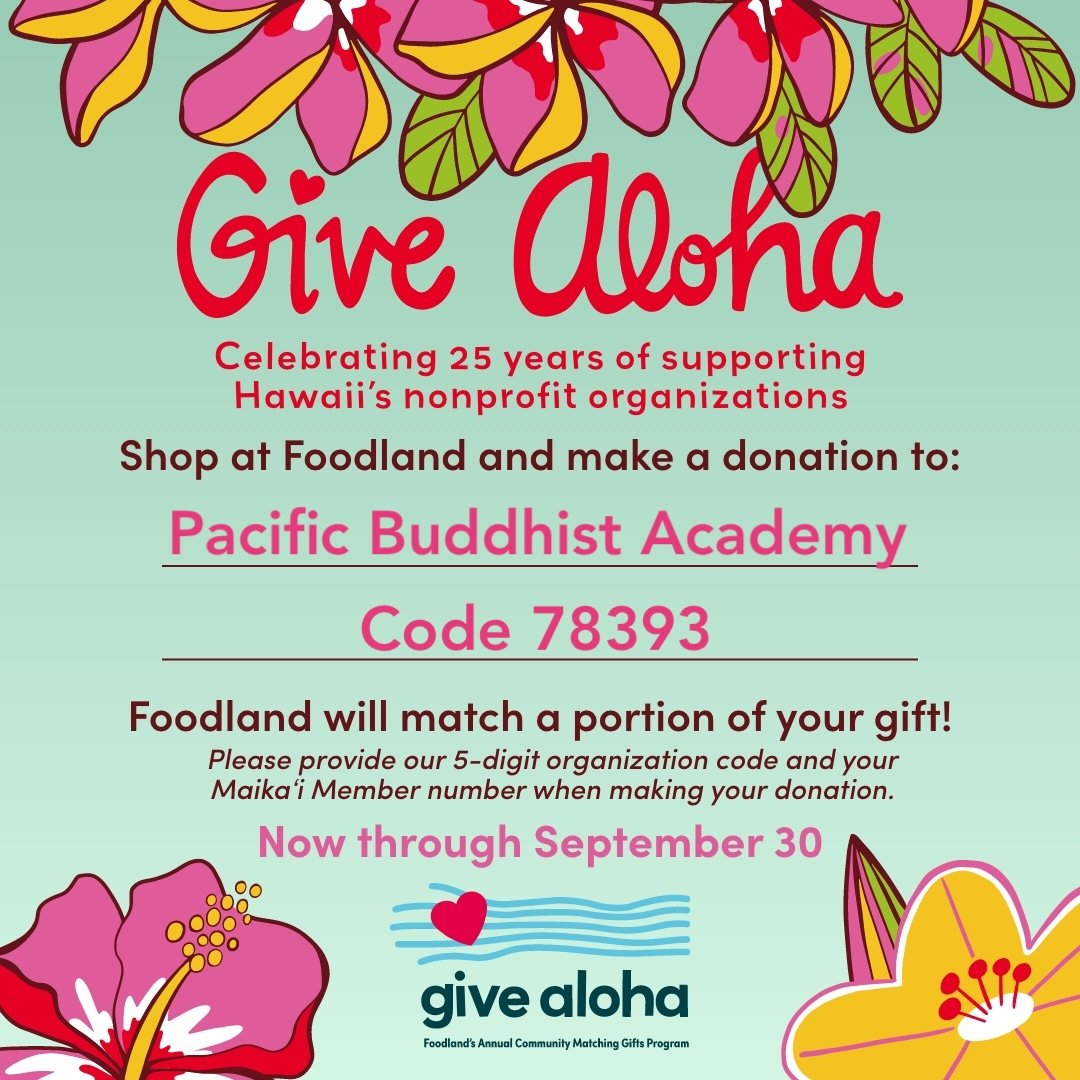
| Buddhist Academy, code 78393. Donations can be made in any amount up to $249, are tax-deductible, and will be matched in part by Foodland’s community matching gift fund. Don’t forget to email your receipt to Megan Lee, Director of Advancement, at [email protected] for a tax receipt for your records! These gifts help ensure that our students graduate not only prepared for college and careers, but also as peacemakers in their homes, communities, and the wider world. | 2025 Lighting Our Way Honorees | PBA's Lighting Our Way Banquet recognizes inspirational individuals and organizations exemplifying leadership principles and values of the school such as selfless service to others, gratitude, and compassion. PBA seniors learn from our inspirational leaders by interviewing and writing brief biographies of them for the Lighting Our Way printed program. Students of all grade levels honor these leaders by presenting honorees with gifts at the event: a taiko performance, song, dance, or work of art. In this way, the banquet is integrated into the curriculum and highlights the school's collaborative learning opportunities. Participating in the banquet program develops students' critical thinking skills and their appreciation for the inspirational leaders they are privileged to meet. Interviewing honorees gives PBA seniors opportunities to imagine pathways to achievement and peace practice across many professional fields. Each year, more than 300 guests attend the banquet. Support for the school through ticket sales, sponsorships, and silent auction donations go towards advancing PBA's unique peace-based student programs. We hope you can join us in honoring the community leaders that light our way. Purchase Your Seats Today | | 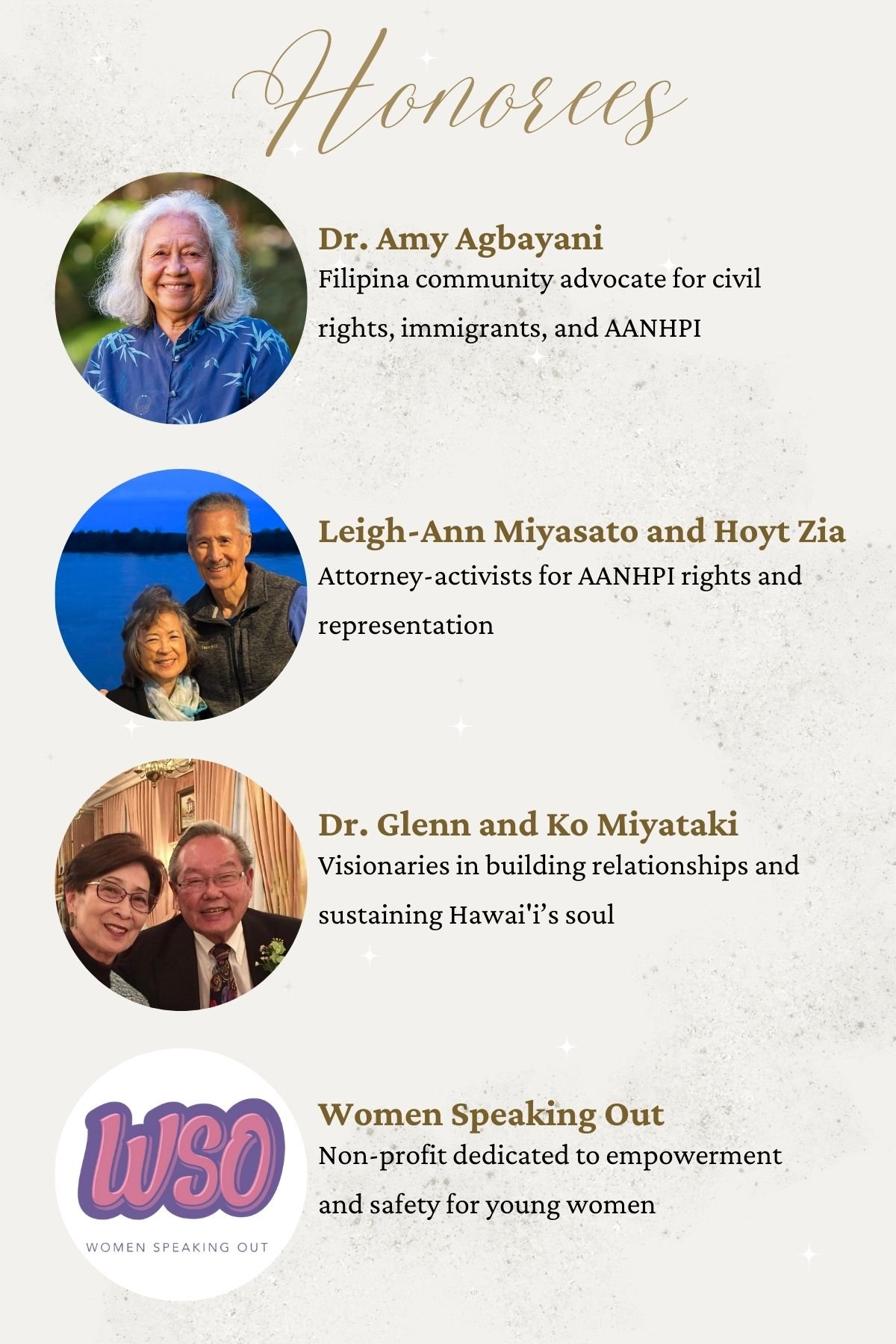
| | OFFICE HOURS
7:30 A.M. - 5:00 P.M.
OFFICE CLOSED
August 26-29 (All-School Camp)
September 1 (Labor Day) | | |